20X13, 30X13, 40X13 & 95X18 Russian Martensitic Stainless Steel
Russian Metals supplies 20X13, 30X13, 40X13 and 95X18 Russian stainless steel for industrial components requiring controlled hardness, mechanical strength, wear resistance and moderate corrosion resistance.
These Russian GOST martensitic stainless steel grades are also identified as 20KH13, 30KH13, 40KH13 and 95KH18, while their Cyrillic designations are 20Х13, 30Х13, 40Х13 and 95Х18.
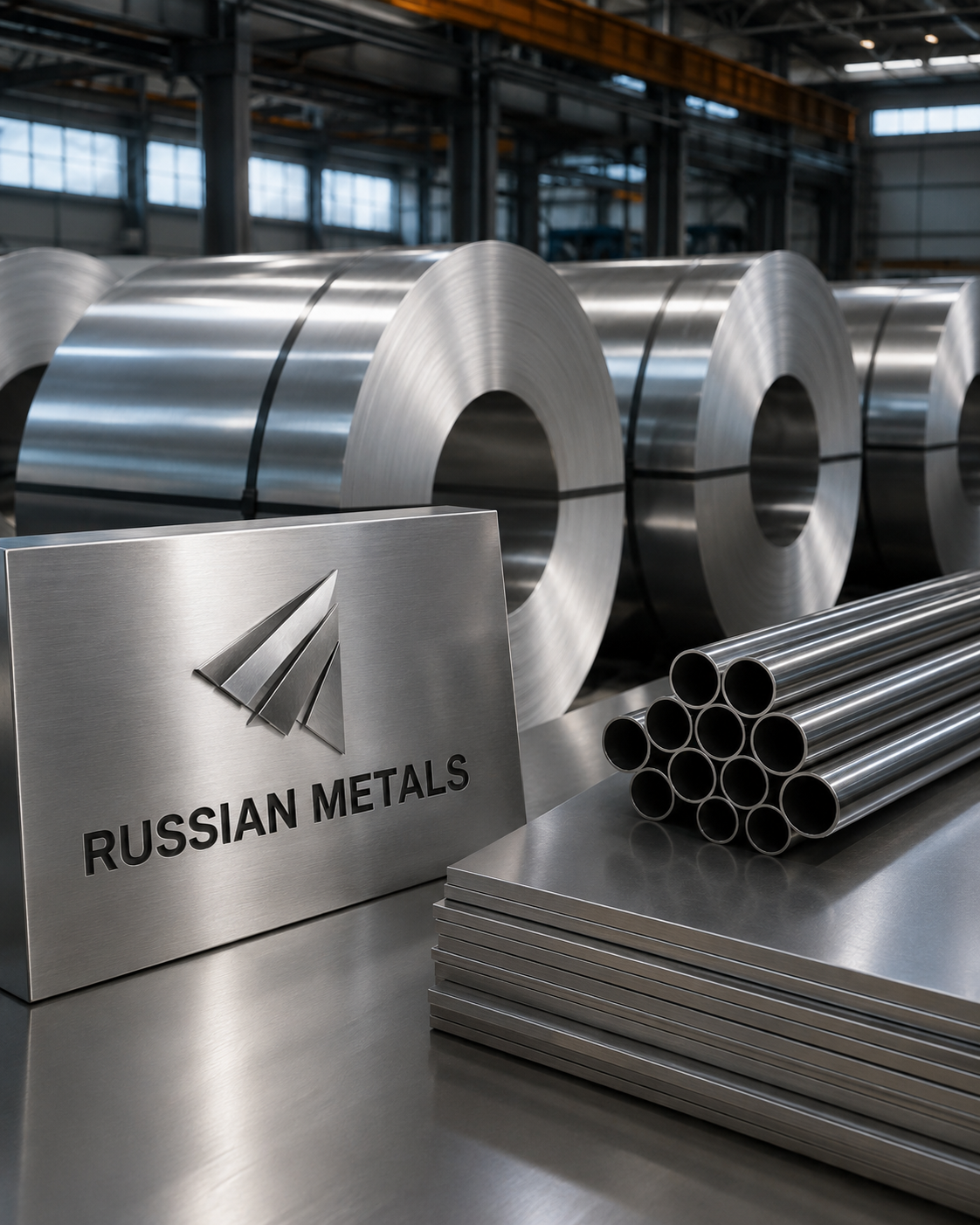
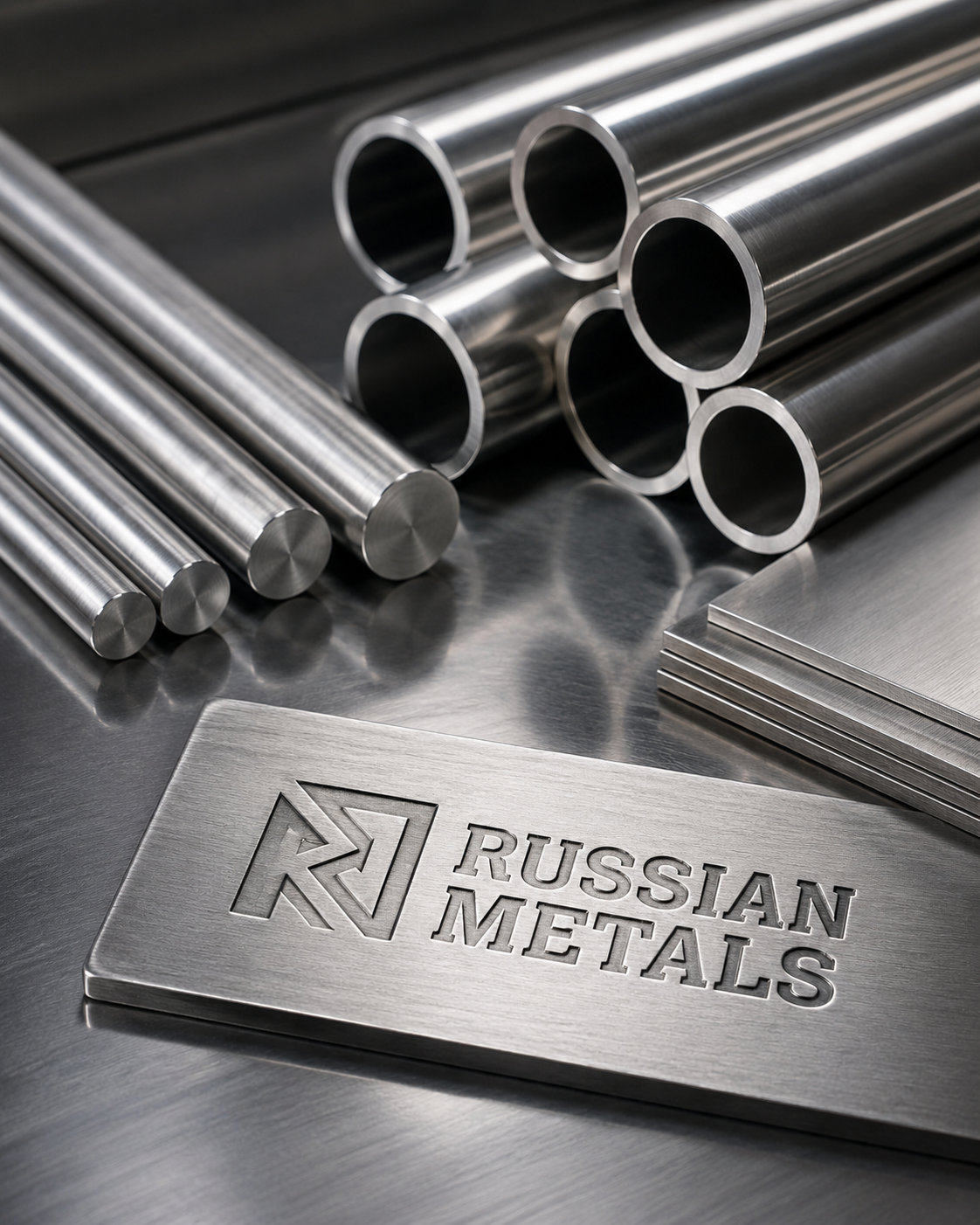
Russian Metals offers these materials in round bars, flat bars, sheets, plates, strips, wire, forgings, pipes and custom-machined or cut-to-size forms, subject to grade, dimensions, quantity and mill availability.
The four grades cover different carbon and hardness levels:
- 20KH13 provides comparatively better toughness and fabrication capability.
- 30KH13 offers a balance of hardness, wear resistance and corrosion resistance.
- 40KH13 provides higher hardness and is widely considered for blades, tools and medical instruments.
- 95KH18 is a high-carbon, high-chromium grade selected for premium knives, bearings and high-wear components.
Material can be supplied with heat-number traceability, mill test certificates, EN 10204 3.1 certification where available, testing documentation and export-ready packaging.
Click any heading below to directly scroll to that section.
Quick Specification Overview
| Property | 20KH13 / 20Х13 | 30KH13 / 30Х13 | 40KH13 / 40Х13 | 95KH18 / 95Х18 |
|---|---|---|---|---|
| Common Latin designation | 20X13 | 30X13 | 40X13 | 95X18 |
| Steel type | Martensitic stainless steel | Martensitic stainless steel | High-carbon martensitic stainless steel | High-carbon, high-chromium martensitic stainless steel |
| Nominal carbon level | 0.16–0.25% | Approximately 0.26–0.35% | 0.36–0.45% | 0.90–1.00% |
| Chromium level | 12–14% | Approximately 12–14% | 12–14% | 17–19% |
| Main selection reason | Strength, toughness and moderate corrosion resistance | Balanced hardness and wear resistance | High hardness and blade performance | High hardness, edge retention and wear resistance |
| Common AISI comparison | AISI 420 | AISI 420 / 420B | AISI 420-type / higher-carbon 420 variants | AISI 440C |
| Common EN comparison | EN 1.4021 / X20Cr13 | EN 1.4028 / X30Cr13 | EN 1.4031 / X39Cr13 | EN 1.4125 / X105CrMo17 |
| Typical applications | Valves, turbine parts, bolts and polished components | Tools, springs, knives and instruments | Knife blades, surgical tools and wear parts | Premium knives, bearings and precision wear parts |
| Heat treatment | Annealing, hardening and tempering | Annealing, hardening and tempering | Annealing, hardening and tempering | Controlled annealing, hardening and low-temperature tempering |
Grade Names and Transliteration Explanation
Russian steel grades frequently appear in Latin and Cyrillic formats.
The Cyrillic letter Х represents chromium and is commonly transliterated as either KH or X in international purchase documents.
Therefore:
| Cyrillic Grade | KH Transliteration | X Transliteration |
|---|---|---|
| 20Х13 | 20KH13 | 20X13 |
| 30Х13 | 30KH13 | 30X13 |
| 40Х13 | 40KH13 | 40X13 |
| 95Х18 | 95KH18 | 95X18 |
The first numerical group broadly indicates the approximate carbon content:
- 20KH13 contains approximately 0.20% carbon.
- 30KH13 contains approximately 0.30% carbon.
- 40KH13 contains approximately 0.40% carbon.
- 95KH18 contains approximately 0.95% carbon.
The final number indicates the approximate chromium content:
- 13 represents approximately 13% chromium.
- 18 represents approximately 18% chromium.
Old and Alternative Grade Designations
20KH13 Alternative Names
20KH13 may appear as:
- 20KH13
- 20X13
- 20Х13
- 2KH13
- 2X13
- 2Х13
- сталь 20Х13
- сталь 2Х13
- мартенситная сталь 20Х13
- нержавеющая сталь 20Х13
The designation 2Х13 is an older or shortened Russian designation commonly associated with 20Х13.
30KH13 Alternative Names
30KH13 may appear as:
- 30KH13
- 30X13
- 30Х13
- 3KH13
- 3X13
- 3Х13
- сталь 30Х13
- сталь 3Х13
- ножевая сталь 30Х13
- инструментальная сталь 30Х13
40KH13 Alternative Names
40KH13 may appear as:
- 40KH13
- 40X13
- 40Х13
- 4KH13
- 4X13
- 4Х13
- сталь 40Х13
- сталь 4Х13
- ножевая сталь 40Х13
- медицинская сталь 40Х13
95KH18 Alternative Names
95KH18 may appear as:
- 95KH18
- 95X18
- 95Х18
- 9KH18
- 9X18
- 9Х18
- EI229
- ЭИ229
- сталь 95Х18
- сталь 9Х18
- сталь ЭИ229
The EI229 designation is frequently used for Russian high-carbon, high-chromium knife and bearing steel associated with 95KH18.
Steel Classification
| Grade | Microstructure after Correct Heat Treatment | Classification |
|---|---|---|
| 20KH13 | Tempered martensite | Low-carbon martensitic stainless steel |
| 30KH13 | Tempered martensite | Medium-carbon martensitic stainless steel |
| 40KH13 | Hardened and tempered martensite | Higher-carbon martensitic stainless steel |
| 95KH18 | High-carbon martensite with chromium carbides | High-carbon, high-chromium stainless tool and bearing steel |
Unlike austenitic grades such as AISI 304 or AISI 316L, these martensitic grades can be hardened through heat treatment.
Their final hardness, toughness, dimensional stability and corrosion resistance depend heavily on the selected annealing, hardening, quenching and tempering process.
20KH13 / 20X13 / 20Х13 Stainless Steel
20KH13 is a martensitic stainless steel containing approximately 12–14% chromium and 0.16–0.25% carbon.
It is selected for mechanical components requiring a combination of moderate corrosion resistance, strength, polishability and better toughness than higher-carbon martensitic grades.
Common applications include steam-turbine blades, valves, bolts, turbine components, hydraulic press valves, water-resistant parts and polished mechanical components.
20KH13 Chemical Composition
Chemical Composition in % for 20KH13 (20Х13)
| Element | Content |
|---|---|
| Carbon, C | 0.16–0.25% |
| Silicon, Si | Maximum 0.60% |
| Manganese, Mn | Maximum 0.60% |
| Nickel, Ni | Maximum 0.60% |
| Sulfur, S | Maximum 0.025% |
| Phosphorus, P | Maximum 0.030% |
| Chromium, Cr | 12.00–14.00% |
| Iron, Fe | Balance |
The chromium content provides stainless characteristics under controlled service conditions, while the carbon content allows the grade to develop useful hardness through heat treatment.
20KH13 Critical Transformation Temperatures
| Critical Point | Approximate Temperature |
|---|---|
| Ac1 | 820°C |
| Ac3 / Acm | 950°C |
| Ar1 | 780°C |
Critical-point temperatures are useful when designing annealing, hardening and tempering cycles.
Actual production parameters should be selected according to section size, furnace conditions, prior microstructure and required mechanical properties.
20KH13 Mechanical Properties
Mechanical Properties at Approximately 20°C
| Product and Standard | Dimension | Direction | Tensile Strength, MPa | Yield Strength, MPa | Elongation, % | Reduction of Area, % | Impact Toughness, kJ/m² | Heat Treatment |
|---|---|---|---|---|---|---|---|---|
| Sheet, GOST 5582-75 | 1–4 mm | Transverse | 490 | — | 20 | — | — | Tempering at 740–800°C |
| Bar, GOST 5949-75 | — | — | 650–830 | 440–635 | 10–16 | 50–55 | 590–780 | Hardening and tempering |
| Bar, GOST 18907-73 | — | — | 510–780 | — | 14 | — | — | According to supplied condition |
| Bar, GOST 18968-73 | — | — | 670 | 490–655 | 18 | 50 | 690 | Normalising and tempering |
| Forging, GOST 25054-81 | Up to 600 mm | Longitudinal | 647 | 441 | 14–16 | 40–50 | 390–640 | Hardening and tempering |
| Thick sheet, GOST 7350-77 | — | — | 510 | 375 | 20 | — | — | Normalised |
Final acceptance requirements must follow the ordered product standard and the values recorded on the material certificate.
20KH13 Physical Properties
| Temperature, °C | Elastic Modulus, ×10⁵ MPa | Thermal Expansion, ×10⁻⁶/K | Thermal Conductivity, W/(m·K) | Density, kg/m³ | Specific Heat, J/(kg·K) | Electrical Resistivity, ×10⁻⁹ Ω·m |
|---|---|---|---|---|---|---|
| 20 | 2.18 | — | 23 | 7,670 | — | 588 |
| 100 | 2.14 | 10.1 | 26 | 7,660 | 461 | 653 |
| 200 | 2.08 | 11.2 | 26 | 7,630 | 523 | 730 |
| 300 | 2.00 | 11.5 | 26 | 7,600 | 565 | 800 |
| 400 | 1.89 | 11.9 | 26 | 7,570 | 628 | 884 |
| 500 | 1.81 | 12.2 | 27 | 7,540 | 691 | 952 |
| 600 | 1.69 | 12.8 | 26 | 7,510 | 775 | 1,022 |
| 700 | — | 12.8 | 26 | 7,480 | 963 | 1,102 |
| 800 | — | 13.0 | 27 | 7,450 | — | — |
| 900 | — | — | 28 | — | — | — |
20KH13 Hardness Information
| Supplied Condition | Product Standard | Brinell Hardness |
|---|---|---|
| Annealed | Bar, GOST 5949-75 | HB 126–197 |
| Normalised and tempered | Bar, GOST 18968-73 | HB 207–241 |
| Specified forging condition | Forging, GOST 25054-81 | HB 197–248 |
Higher hardness may be achieved after hardening and tempering, but the final value depends on austenitising temperature, quenching medium, section size and tempering temperature.
20KH13 Equivalent Grades
| Country or Standard | Equivalent or Nearest Grade |
|---|---|
| USA | AISI 420, UNS S42000 |
| Germany / EN | 1.4021, X20Cr13 |
| Japan | SUS420J1 |
| France | Z20C13 |
| United Kingdom | 420S29, 420S37, En56C |
| Italy | X20Cr13 |
| Spain | F.3402 |
| China | 2Cr13 |
| Sweden | SS 2303 |
| Poland | 2H13 |
| Czechia | 17022 |
20KH13 vs AISI 420
20KH13 is commonly compared with AISI 420 because both are martensitic stainless steels containing approximately 12–14% chromium.
AISI 420 covers several carbon levels and product specifications. Therefore, not every AISI 420 heat is an exact replacement for 20KH13.
The buyer should compare:
- Carbon content
- Chromium content
- Heat-treatment condition
- Required hardness
- Mechanical properties
- Product standard
- Dimensional tolerances
20KH13 vs EN 1.4021
EN 1.4021 / X20Cr13 is generally the closest European comparison to 20KH13.
Both grades have similar carbon and chromium ranges and are used for valves, mechanical components, blades and moderately corrosion-resistant parts.
Substitution still requires confirmation through the complete specification and MTC.
20KH13 Heat-Treatment Process
Annealing
Annealing is used to reduce hardness, improve machinability and prepare the material for further processing.
Heating and cooling rates should be controlled to prevent excessive internal stress and carbide-related microstructural problems.
Hardening and Quenching
20KH13 can be hardened by heating above the transformation range followed by controlled quenching.
The quenching medium depends on:
- Section thickness
- Required hardness
- Distortion tolerance
- Component geometry
- Risk of cracking
Tempering
Tempering is essential after hardening to reduce brittleness and achieve the required balance of strength and toughness.
20KH13 is reported as being predisposed to temper brittleness. The tempering cycle and cooling practice must therefore be controlled carefully.
20KH13 Corrosion Resistance
20KH13 provides moderate corrosion resistance in atmospheric environments, fresh water, steam and mildly corrosive media when the surface is correctly finished and the material is properly heat treated.
Its corrosion resistance is lower than austenitic stainless steels such as AISI 304 or AISI 316.
Best corrosion performance is normally achieved with:
- A clean polished surface
- Correct hardening and tempering
- Removal of heat tint and scale
- Proper passivation where applicable
- Avoidance of chloride-rich or strongly acidic environments
20KH13 Wear and Abrasion Resistance
20KH13 offers useful wear resistance after hardening, although it does not reach the hardness and edge-retention capability of 40KH13 or 95KH18.
It is suitable where toughness is more important than maximum wear resistance.
20KH13 Welding Information
20KH13 has limited weldability.
Welding may require:
- Controlled preheating
- Low-hydrogen welding procedures
- Suitable filler material
- Controlled heat input
- Post-weld heat treatment
- Slow or controlled cooling
Welding untreated or highly hardened components without an approved procedure may cause cracking or excessive brittleness.
20KH13 Machining and Fabrication
20KH13 is easier to machine in an annealed condition than after hardening.
It can be:
- Turned
- Milled
- Drilled
- Ground
- Polished
- Forged
- Hot formed
- Machined into valve and turbine components
Final machining is often completed before hardening, followed by finish grinding or polishing.
20KH13 Main Applications
20KH13 is used for:
- Steam-turbine blades
- Turbine components
- Industrial valves
- Hydraulic press valves
- Bolts and fasteners
- Impact-loaded components
- Water-resistant mechanical parts
- Shafts and spindles
- Pump components
- Polished engineering components
- Moderately corrosion-resistant machine parts
30KH13 / 30X13 / 30Х13 Stainless Steel
30KH13 is a medium-carbon martensitic stainless steel designed to provide a stronger balance of hardness, wear resistance and corrosion resistance than 20KH13.
It is widely considered for cutting tools, surgical instruments, measuring tools, household knives, springs, compressor valve plates and precision components.
30KH13 Chemical Composition
Typical Chemical Composition for 30KH13 (30Х13)
| Element | Typical Content |
|---|---|
| Carbon, C | Approximately 0.26–0.35% |
| Silicon, Si | Maximum approximately 0.80% |
| Manganese, Mn | Maximum approximately 0.80% |
| Nickel, Ni | Maximum approximately 0.60% |
| Sulfur, S | Maximum approximately 0.025% |
| Phosphorus, P | Maximum approximately 0.030% |
| Chromium, Cr | Approximately 12.00–14.00% |
| Iron, Fe | Balance |
Exact limits must be confirmed against the ordered GOST edition, product specification and MTC.
30KH13 Mechanical Properties
Mechanical properties vary significantly according to annealing, hardening and tempering condition.
| Condition | Expected Performance |
|---|---|
| Annealed | Lower hardness and improved machinability |
| Hardened | High hardness with reduced toughness |
| Hardened and low tempered | High cutting and wear performance |
| Hardened and higher tempered | Improved toughness with reduced maximum hardness |
| Cold worked | Increased strength and work hardening |
The purchase order should specify the required supplied condition instead of relying only on the grade name.
30KH13 Physical Properties
30KH13 has physical behaviour typical of 12–14% chromium martensitic stainless steels.
Key characteristics include:
- Density generally around the martensitic stainless steel range
- Lower thermal expansion than austenitic stainless steel
- Magnetic behaviour
- Thermal conductivity higher than many austenitic stainless grades
- Elastic modulus that decreases as temperature increases
Project-critical physical values should be taken from the applicable certified specification.
30KH13 Hardness Information
30KH13 can develop greater hardness than 20KH13 because of its higher carbon content.
The final hardness depends on:
- Austenitising temperature
- Holding time
- Quenching medium
- Section size
- Tempering temperature
- Retained austenite
- Surface decarburisation
For knife, tool and surgical-instrument applications, hardness must be specified together with toughness, corrosion and dimensional requirements.
30KH13 Equivalent Grades
| Standard or Region | Common Comparison |
|---|---|
| USA | AISI 420 / higher-carbon 420 variants |
| Germany / EN | EN 1.4028 |
| EN Designation | X30Cr13 |
| Japan | SUS420J2 |
| UNS | S42020 |
| Russian old designation | 3KH13 / 3Х13 |
30KH13 vs AISI 420
30KH13 is commonly compared with higher-carbon AISI 420 variants.
A generic AISI 420 certificate may not provide the same carbon range or final hardness as 30KH13.
For tool and knife applications, buyers should verify:
- Carbon range
- Chromium level
- Hardening response
- Achievable hardness
- Inclusion cleanliness
- Surface quality
- Decarburisation limits
30KH13 vs EN 1.4028
EN 1.4028 / X30Cr13 is the most common European comparison for 30KH13.
Both are medium-carbon martensitic stainless steels used for blades, cutting components, tools and mechanical parts.
30KH13 Heat-Treatment Process
Annealing
Annealing reduces hardness and improves machining before final hardening.
Slow, controlled cooling is generally required to produce a machinable structure and reduce cracking risk.
Hardening and Quenching
Hardening is performed by heating into the austenitising range and quenching under controlled conditions.
Excessive austenitising temperature may cause:
- Grain growth
- Increased retained austenite
- Distortion
- Lower toughness
- Reduced corrosion performance
Tempering
Tempering temperature determines the final balance between hardness and toughness.
Low-temperature tempering is generally selected where high hardness and cutting performance are required.
Higher tempering temperatures may be selected where toughness and impact resistance are more important.
30KH13 Corrosion Resistance
30KH13 provides moderate corrosion resistance in atmospheric, water and mild industrial conditions.
Corrosion resistance is influenced by:
- Heat treatment
- Surface finish
- Carbide distribution
- Hardening temperature
- Tempering cycle
- Exposure medium
A polished surface generally performs better than a rough or heavily scaled surface.
30KH13 Wear and Abrasion Resistance
30KH13 offers better wear resistance than 20KH13 after proper hardening.
It is suitable for:
- Cutting edges
- Compressor valve plates
- Measuring tools
- Springs
- Carburettor needles
- Household knives
- Medical tools
It does not generally provide the same maximum wear resistance as 95KH18.
30KH13 Welding Information
Weldability is limited because the steel can form hard and brittle martensite in the heat-affected zone.
Welding should only be carried out using a qualified procedure with suitable preheating, controlled heat input and post-weld treatment.
30KH13 Machining and Fabrication
30KH13 should preferably be machined in the annealed condition.
Typical fabrication operations include:
- Saw cutting
- Turning
- Milling
- Drilling
- Grinding
- Polishing
- Hot forging
- Blank preparation
- Precision finish grinding after hardening
30KH13 Main Applications
30KH13 is used for:
- Cutting tools
- Surgical instruments
- Medical instruments
- Knife blades
- Measuring tools
- Household tools
- Springs
- Compressor valve plates
- Carburettor needles
- Precision mechanical parts
- Hardened polished components
40KH13 / 40X13 / 40Х13 Stainless Steel
40KH13 is a higher-carbon martensitic stainless steel containing approximately 0.36–0.45% carbon and 12–14% chromium.
It is selected where high hardness, wear resistance, polishability and a sharp cutting edge are more important than maximum toughness or weldability.
Russian Metals supplies 40KH13 for knife blades, surgical instruments, medical tools, cutting tools, measuring instruments, springs, valve plates and wear-resistant components.
40KH13 Chemical Composition
Chemical Composition in % for 40KH13 (40Х13)
| Element | Minimum | Maximum |
|---|---|---|
| Carbon, C | 0.36% | 0.45% |
| Silicon, Si | — | 0.80% |
| Manganese, Mn | — | 0.80% |
| Phosphorus, P | — | 0.030% |
| Sulfur, S | — | 0.025% |
| Chromium, Cr | 12.00% | 14.00% |
| Nickel, Ni | — | 0.60% |
| Titanium, Ti | — | 0.20% |
| Iron, Fe | Balance | Balance |
The relatively high carbon level enables 40KH13 to achieve greater hardness than 20KH13 and 30KH13 after correct heat treatment.
40KH13 Mechanical Properties
Mechanical properties of 40KH13 vary substantially with heat-treatment condition.
The values should therefore be specified by supplied condition rather than presented as one universal grade value.
| Supplied Condition | General Performance |
|---|---|
| Annealed | Improved machinability and lower hardness |
| Hardened | High hardness and reduced ductility |
| Hardened and low tempered | High blade and wear performance |
| Hardened and higher tempered | Improved toughness with lower hardness |
| Ground and polished | Improved dimensional accuracy and surface condition |
For critical tools, blades or medical instruments, buyers should specify:
- Required final hardness
- Impact or bend requirements
- Decarburisation limits
- Surface defects
- Inclusion cleanliness
- Grain size
- Heat-treatment condition
40KH13 Physical Properties
40KH13 is a magnetic martensitic stainless steel.
Its physical behaviour includes:
- Lower thermal expansion than austenitic stainless steel
- Higher thermal conductivity than many austenitic grades
- Density within the typical martensitic stainless steel range
- Temperature-dependent elastic modulus
- Increased dimensional sensitivity during hardening
Engineering-critical physical values must be taken from the agreed material specification or certified data.
40KH13 Hardness Information
40KH13 can achieve high hardness after hardening and tempering.
Final hardness is influenced by:
- Carbon and chromium content
- Austenitising temperature
- Holding time
- Quenching method
- Tempering temperature
- Component thickness
- Retained austenite
- Surface decarburisation
For knife and surgical-tool applications, excessive hardness can reduce toughness and increase chipping risk. The target hardness should match the final use rather than simply selecting the maximum possible value.
40KH13 Equivalent Grades
| Standard or Region | Common Comparison |
|---|---|
| USA | AISI 420-type high-carbon martensitic stainless steel |
| Germany / EN | EN 1.4031 |
| EN Designation | X39Cr13 |
| Alternative EN comparison | EN 1.4034 / X46Cr13 |
| Russian old designation | 4KH13 / 4Х13 |
40KH13 vs AISI 420
40KH13 is commonly compared with higher-carbon AISI 420 stainless steel.
However, AISI 420 is a broad designation and may include material with a different carbon content from 40KH13.
40KH13 should not automatically be described as AISI 420C or 420HC without reviewing the actual chemistry and governing specification.
40KH13 vs EN 1.4031
EN 1.4031 / X39Cr13 is generally the closest European comparison to 40KH13 because of the similar nominal carbon and chromium levels.
EN 1.4034 / X46Cr13 may also be considered as a nearest comparison for higher-carbon requirements, but it is not automatically identical.
40KH13 Heat-Treatment Process
Annealing
Annealing is used before machining and forming to reduce hardness and internal stress.
The steel should be protected from excessive oxidation and decarburisation because carbon loss at the surface can reduce final hardness.
Hardening and Quenching
Hardening requires controlled austenitising and quenching.
Important controls include:
- Uniform furnace temperature
- Correct soaking time
- Protection against decarburisation
- Suitable quenching medium
- Distortion control
- Immediate tempering after quenching
Tempering
Low-temperature tempering is generally selected for blades and cutting tools requiring high hardness.
A higher tempering temperature may be chosen for springs, mechanical tools and parts requiring improved toughness.
Improper tempering can cause:
- Chipping
- Cracking
- Dimensional instability
- Excessive brittleness
- Reduced corrosion resistance
40KH13 Corrosion Resistance
40KH13 provides moderate stainless performance when properly hardened, finished and polished.
Because of its higher carbon content, more chromium can be tied up in carbides than in lower-carbon martensitic grades. This can reduce the amount of chromium available in the surrounding matrix.
For better corrosion resistance:
- Use an appropriate hardening cycle.
- Avoid overheating.
- Remove grinding contamination.
- Polish the final surface.
- Clean and passivate where appropriate.
- Avoid prolonged exposure to chlorides and strong acids.
40KH13 Wear and Abrasion Resistance
40KH13 provides good wear resistance after hardening.
It is suitable for:
- Knife edges
- Cutting tools
- Measuring instruments
- Surgical tools
- Compressor valve plates
- Springs
- Polished wear components
Its wear resistance is higher than 20KH13 and generally higher than 30KH13, but lower than correctly processed 95KH18.
40KH13 Welding Information
40KH13 has poor to limited weldability because of its high hardenability.
Welding can form brittle martensite and cracking in the heat-affected zone.
Where welding cannot be avoided, the procedure may require:
- Preheating
- Low-hydrogen consumables
- Controlled interpass temperature
- Post-weld tempering
- Slow cooling
- Final inspection for cracking
For many blade and tool applications, mechanical joining or machining from solid material is preferable to welding.
40KH13 Machining and Fabrication
40KH13 should normally be machined in an annealed condition.
Available processing can include:
- Saw cutting
- Turning
- Milling
- Drilling
- Grinding
- Surface polishing
- Flat-bar preparation
- Blade blank preparation
- Wire processing
- Forging
- Final grinding after heat treatment
40KH13 Main Applications
40KH13 is used for:
- Knife blades
- Surgical instruments
- Medical tools
- Cutting tools
- Measuring instruments
- Springs
- Compressor valve plates
- Polished tools
- Wear-resistant components
- Household cutting tools
- Hardened stainless steel blades
- Precision mechanical parts
95KH18 / 95X18 / 95Х18 Stainless Steel
95KH18 is a high-carbon, high-chromium martensitic stainless steel used where high hardness, edge retention, abrasion resistance and dimensional stability are required.
It is commonly associated with Russian knife steel, bearing components, bushings, valve parts, precision wear parts and high-performance cutting components.
The grade is also known as EI229 / ЭИ229 and is commonly compared with AISI 440C and EN 1.4125.
95KH18 Chemical Composition
Chemical Composition in % for 95KH18 (95Х18)
| Element | Content |
|---|---|
| Carbon, C | 0.90–1.00% |
| Silicon, Si | Maximum 0.80% |
| Manganese, Mn | Maximum 0.80% |
| Nickel, Ni | Maximum 0.60% |
| Sulfur, S | Maximum 0.025% |
| Phosphorus, P | Maximum 0.030% |
| Chromium, Cr | 17.00–19.00% |
| Titanium, Ti | Maximum 0.20% |
| Copper, Cu | Maximum 0.30% |
| Iron, Fe | Balance |
The high carbon content allows the formation of hard martensite and chromium carbides.
The 17–19% chromium level provides stainless characteristics while supporting wear resistance through chromium-carbide formation.
95KH18 Critical Transformation Temperatures
| Critical Point | Approximate Temperature |
|---|---|
| Ac1 | 830°C |
| Ac3 / Acm | 1,100°C |
| Ar3 / Arcm | 810°C |
These temperatures help define suitable annealing and hardening windows.
Heat treatment must account for carbide dissolution, retained austenite, grain growth and dimensional stability.
95KH18 Mechanical Properties
Mechanical Properties at Approximately 20°C
| Product Form | Tensile Strength, MPa | Yield Strength, MPa | Elongation, % | Reduction of Area, % | Heat Treatment |
|---|---|---|---|---|---|
| Bar | 770 | 420 | 15 | 30 | Annealing at approximately 885–920°C for 1–2 hours |
These values describe the stated annealed condition and should not be treated as the final properties of hardened knife or bearing components.
Final hardened properties depend on:
- Austenitising temperature
- Quenching rate
- Cryogenic treatment where specified
- Tempering temperature
- Section size
- Retained austenite
- Carbide distribution
95KH18 Physical Properties
| Temperature, °C | Elastic Modulus, ×10⁵ MPa | Thermal Expansion, ×10⁻⁶/K | Thermal Conductivity, W/(m·K) | Density, kg/m³ | Specific Heat, J/(kg·K) |
|---|---|---|---|---|---|
| 20 | 2.04 | — | 24 | 7,750 | — |
| 100 | — | 11.8 | — | 7,730 | 483 |
| 200 | — | 12.3 | — | — | — |
| 300 | — | 12.7 | — | — | — |
| 400 | — | 13.1 | — | — | — |
| 500 | — | 13.4 | — | — | — |
95KH18 Hardness Information
| Condition | Product Standard | Brinell Hardness |
|---|---|---|
| Annealed | Bar, GOST 5949-75 | HB up to approximately 269 |
After hardening and tempering, 95KH18 can develop substantially higher hardness than the annealed value.
Maximum hardness alone should not be used as the only selection criterion. Premium knife and bearing applications also require:
- Controlled carbide distribution
- Low inclusion content
- Fine grain size
- Limited decarburisation
- Dimensional stability
- Suitable toughness
- Correct tempering
- Surface integrity
95KH18 Equivalent Grades
| Standard or Region | Equivalent or Nearest Grade |
|---|---|
| USA | AISI 440C, 440B, 440FSe, A756 |
| Germany / EN | EN 1.4125 |
| EN Designation | X105CrMo17, X102CrMo17 |
| Japan | SUS440C |
| France | Z100CD17 |
| UNS | S44004 |
| Poland | H18 |
| Czechia | 17042 |
| Russian trade designation | EI229 / ЭИ229 |
95KH18 vs AISI 440C
95KH18 is commonly compared with AISI 440C because both grades contain high carbon and high chromium and can achieve high hardness after heat treatment.
Differences may still exist in:
- Carbon limits
- Chromium range
- Molybdenum content
- Residual elements
- Carbide distribution
- Inclusion cleanliness
- Product standard
- Heat-treatment response
AISI 440C should therefore be described as a close international comparison rather than automatically claiming that every heat is identical.
95KH18 vs EN 1.4125
EN 1.4125 / X105CrMo17 is a common European comparison for 95KH18.
EN 1.4125 generally includes molybdenum in its specification, while the supplied 95KH18 chemistry must be checked separately.
For bearing, knife or high-wear applications, the complete MTC and heat-treatment requirements must be reviewed before substitution.
95KH18 Heat-Treatment Process
Annealing
The provided annealing range is approximately 885–920°C with a holding time of around one to two hours for bar material.
Controlled cooling is required to:
- Reduce hardness
- Improve machinability
- Reduce internal stress
- Prepare the steel for hardening
- Control carbide distribution
Hardening and Quenching
95KH18 requires carefully controlled hardening.
Excessive hardening temperature may cause:
- Grain growth
- Excessive retained austenite
- Dimensional instability
- Reduced toughness
- Lower corrosion resistance
- Chipping during use
Protective atmosphere, vacuum processing or controlled salt-bath treatment may be used where surface decarburisation must be minimised.
Tempering
Low-temperature tempering is commonly selected for high-hardness knife and bearing applications.
More than one tempering cycle may be specified to improve dimensional stability and reduce retained stresses.
Cryogenic treatment may be considered for specific precision applications, but it should form part of a controlled and tested heat-treatment procedure.
95KH18 Corrosion Resistance
95KH18 offers useful corrosion resistance for a high-carbon tool and bearing steel, but its corrosion performance is not equivalent to low-carbon austenitic stainless grades.
Corrosion resistance depends on:
- Hardening temperature
- Chromium retained in the matrix
- Carbide distribution
- Surface polish
- Tempering cycle
- Exposure medium
- Cleaning and maintenance
Knife blades and precision components should be cleaned and dried after exposure to moisture, salts, food acids or industrial contaminants.
95KH18 Wear and Abrasion Resistance
95KH18 provides the highest wear resistance among the four grades covered on this page.
Its high carbon and chromium content support:
- High hardness
- Edge retention
- Abrasion resistance
- Contact-wear resistance
- Dimensional stability
- Resistance to surface deformation
It is suitable for components where repeated friction or cutting contact occurs.
95KH18 Welding Information
95KH18 is generally unsuitable for routine welding because of its high carbon content, high hardenability and cracking risk.
Where repair welding is unavoidable, it requires a specialist procedure with controlled preheating, filler selection, post-weld heat treatment and inspection.
Machining the component from solid material is usually preferable.
95KH18 Machining and Fabrication
95KH18 should be machined in an annealed condition.
Typical processing includes:
- Saw cutting
- Turning
- Milling
- Drilling
- Precision grinding
- Surface polishing
- Blade blank preparation
- Bearing-component machining
- Forging
- Final grinding after hardening
- Lapping and superfinishing
Tool wear increases significantly after hardening.
95KH18 Main Applications
95KH18 is used for:
- Premium knife blades
- High-performance knives
- Ball bearings
- Bearing components
- Bearing rings and balls
- Bushings
- Valve parts
- Cutting tools
- Oil-equipment bearings
- High-hardness stainless components
- Precision mechanical parts
- Abrasion-resistant components
- Wear-resistant industrial parts
Comparison of 20KH13, 30KH13, 40KH13 and 95KH18
| Selection Factor | 20KH13 | 30KH13 | 40KH13 | 95KH18 |
|---|---|---|---|---|
| Carbon level | Lowest | Medium | Higher | Highest |
| Toughness | Highest among these grades | Moderate | Lower than 20KH13 | Lowest if hardened to maximum hardness |
| Achievable hardness | Moderate | Medium to high | High | Very high |
| Wear resistance | Moderate | Good | High | Very high |
| Edge retention | Moderate | Good | High | Very high |
| General corrosion resistance | Moderate | Moderate | Moderate when polished | Useful but heat-treatment dependent |
| Weldability | Limited | Poor to limited | Poor | Generally not recommended |
| Machinability before hardening | Good | Moderate | Moderate | More difficult |
| Typical equivalent | X20Cr13 | X30Cr13 | X39Cr13 | X105CrMo17 |
| Best suited for | Valves and tough parts | General tools and knives | Blades and medical tools | Premium knives and bearings |
Available Product Forms
Russian Metals can supply the following product forms subject to grade, size, quantity and production availability:
| Product Form | 20KH13 | 30KH13 | 40KH13 | 95KH18 |
|---|---|---|---|---|
| Round bar | Available | Available | Available | Available |
| Flat bar | Available | Available | Available | Available |
| Square bar | On request | On request | On request | On request |
| Sheet | Available | Available | Available | On request |
| Plate | Available | Available | Available | On request |
| Coil | On request | On request | On request | Limited / on request |
| Strip | Available | Available | Available | Available |
| Wire | On request | Available | Available | On request |
| Forged bar | Available | Available | Available | Available |
| Forgings | Available | Available | Available | Available |
| Seamless pipe | On request | Limited | Limited | Generally uncommon |
| Custom-cut blanks | Available | Available | Available | Available |
| Machined components | On request | On request | On request | On request |
Available Sizes and Dimensions
Dimensions depend on the grade, source mill, production method and minimum order quantity.
Information Required for Size Confirmation
| Product | Required Information |
|---|---|
| Round bar | Diameter, length, tolerance and surface condition |
| Flat bar | Thickness, width, length and edge condition |
| Sheet or plate | Thickness, width, length, finish and flatness |
| Strip | Thickness, width, coil weight, edge and temper |
| Wire | Diameter, condition, coil weight and surface |
| Forging | Drawing, finished dimensions, machining allowance and test plan |
| Pipe or tube | Outside diameter, wall thickness, length and standard |
| Blade blank | Thickness, profile, machining allowance and surface condition |
Custom sizes, cut lengths and forged dimensions can be quoted after reviewing the complete technical requirement.
Applicable GOST, ASTM and EN Standards
| Standard | Typical Coverage |
|---|---|
| GOST 5632 | Stainless, corrosion-resistant and heat-resistant steel grades |
| GOST 5949-75 | Stainless and heat-resistant steel bars |
| GOST 5582-75 | Thin corrosion-resistant stainless steel sheet |
| GOST 7350-77 | Thick stainless steel sheet and plate |
| GOST 25054-81 | Corrosion-resistant steel forgings |
| GOST 18907-73 | Calibrated and special-finish steel bars |
| GOST 18968-73 | Corrosion-resistant steel bars for specific applications |
| ASTM A276 | Stainless steel bars and shapes |
| ASTM A484 | General requirements for stainless steel bars and forgings |
| ASTM A240 | Chromium and chromium-nickel stainless steel plate, sheet and strip |
| EN 10088 | Stainless steel grades and technical delivery conditions |
| EN 10204 | Metallic-product inspection documents |
Supplying a Russian grade does not automatically mean that the material complies with an ASTM or EN product standard.
Dual certification must be explicitly stated on the MTC.
Industries Served
Russian Metals supplies martensitic stainless steel for:
- Knife and blade manufacturing
- Surgical-instrument manufacturing
- Medical-tool production
- Bearing manufacturing
- Valve manufacturing
- Steam-turbine manufacturing
- Pump manufacturing
- Precision engineering
- Tool and die production
- Compressor manufacturing
- Oil and gas equipment
- Power-generation equipment
- Automotive components
- Food-processing tools
- Industrial maintenance
- Defence and specialised engineering
- Export-oriented component manufacturing
Material Testing and Inspection
Testing can be arranged according to the product form, quantity and project requirements.
Available tests may include:
- Chemical composition analysis
- Positive material identification
- Tensile testing
- Yield-strength testing
- Elongation testing
- Impact testing
- Brinell hardness testing
- Rockwell hardness testing
- Microstructure examination
- Grain-size examination
- Decarburisation-depth inspection
- Inclusion-rating inspection
- Ultrasonic testing
- Magnetic-particle testing
- Surface-defect inspection
- Dimensional inspection
- Straightness inspection
- Third-party inspection
- Heat-treatment verification
All special tests should be confirmed before order placement.
MTC and EN 10204 3.1 Certification
Russian Metals can supply material with documentation subject to the selected source and product form.
Available documents may include:
- Mill test certificate
- Heat-number traceability
- Chemical composition results
- Mechanical test results
- Hardness test results
- Heat-treatment condition
- Dimensional inspection report
- Certificate of conformity
- EN 10204 3.1 inspection certificate
- Third-party inspection report
- Country-of-origin certificate
- Packing list
- Commercial invoice
- Export documentation
Buyers requiring an EN 10204 3.1 certificate must mention the requirement before quotation.
A trader-issued certificate of conformity is not the same as a mill-issued EN 10204 3.1 certificate.
Packaging and Export Documentation
Packaging is selected according to product form, dimensions and shipment method.
Available packaging may include:
- Waterproof wrapping
- Wooden boxes
- Export-grade wooden pallets
- Steel straps
- Edge protection
- Bar bundles
- Pipe end caps
- Rust-preventive protection where applicable
- Heat-number tags
- Grade and size identification
- Custom purchase-order markings
- Fumigated wooden packaging where required
Export documentation may include:
- Commercial invoice
- Packing list
- Mill test certificate
- Certificate of origin
- Inspection certificate
- Shipping marks
- Fumigation certificate
- Bill-of-lading support documents
Russian Stainless Steel Supplier and Stock Availability
Russian Metals supplies 20KH13, 30KH13, 40KH13 and 95KH18 stainless steel to buyers in Mumbai, Maharashtra and across India.
We support enquiries for:
- 20KH13 stainless steel supplier India
- 20X13 steel supplier India
- 20KH13 round bar supplier
- 20KH13 stainless steel plate supplier
- 30KH13 stainless steel supplier India
- 30KH13 knife steel supplier
- 30KH13 surgical steel supplier
- 30KH13 sheet and plate supplier
- 40KH13 stainless steel supplier India
- 40KH13 Russian knife steel supplier
- 40KH13 surgical steel supplier
- 40KH13 round bar supplier
- 95KH18 stainless steel supplier India
- 95KH18 knife steel supplier India
- 95KH18 bearing steel supplier India
- EI229 steel supplier India
- 95KH18 round bar supplier
- 95KH18 forged bar supplier
Stock availability depends on:
- Required grade
- Product form
- Diameter or thickness
- Required length
- Quantity
- Supplied condition
- Heat-treatment requirement
- Testing requirement
- Certification
- Delivery destination
Price per Kilogram
The price of 20KH13, 30KH13, 40KH13 and 95KH18 cannot be fixed only by grade name.
Price per kilogram depends on:
- Product form
- Diameter or thickness
- Order quantity
- Heat-treatment condition
- Surface finish
- Material origin
- Testing requirements
- MTC and certification
- Cutting or machining
- Export packaging
- Freight and delivery location
Higher-alloy and specialised 95KH18 material may cost more than standard 20KH13 or 30KH13 material because of alloy content, heat treatment, cleanliness and production requirements.
Request a Quote
Send the following information to Russian Metals for an accurate quotation:
- Required steel grade
- Accepted equivalent grade, if any
- Product form
- Exact dimensions
- Required quantity
- GOST, ASTM or EN standard
- Annealed, hardened or tempered condition
- Required hardness
- Surface-finish requirement
- Machining or cut-to-size requirement
- MTC or EN 10204 3.1 requirement
- Testing and inspection requirement
- Delivery city, port or country
- Required delivery schedule
Russian Metals will review the specification and quote the closest compliant material rather than substituting material only by a similar grade name.
Frequently Asked Questions
What is 20KH13 stainless steel?▾
20KH13 is a martensitic stainless steel containing approximately 0.16–0.25% carbon and 12–14% chromium.
It is used for valves, turbine parts, bolts, shafts and moderately corrosion-resistant mechanical components.
What is the equivalent of 20X13?▾
The most common international comparisons are AISI 420, UNS S42000 and EN 1.4021 / X20Cr13.
Final equivalency must be confirmed through chemistry, mechanical properties and MTC.
Is 20KH13 weldable?▾
20KH13 has limited weldability.
Preheating, controlled heat input, post-weld tempering and slow cooling may be required to reduce cracking risk.
What is 30KH13 used for?▾
30KH13 is used for knives, cutting tools, springs, surgical instruments, measuring tools, compressor valve plates and precision mechanical components.
Is 30X13 equivalent to AISI 420?▾
30X13 is commonly compared with higher-carbon AISI 420 variants.
A generic AISI 420 grade is not automatically an exact substitute because its carbon level may differ.
What is the EN equivalent of 30KH13?▾
EN 1.4028 / X30Cr13 is the most common European comparison.
Is 40KH13 good knife steel?▾
40KH13 can provide good knife performance when correctly hardened and tempered.
It offers useful hardness, edge retention, polishability and moderate corrosion resistance.
Its performance depends heavily on heat treatment.
Is 40KH13 equivalent to AISI 420C?▾
40KH13 is a higher-carbon AISI 420-type martensitic stainless steel, but it should not automatically be labelled AISI 420C without comparing the complete specifications.
What is the closest EN grade to 40KH13?▾
EN 1.4031 / X39Cr13 is generally the closest comparison.
EN 1.4034 / X46Cr13 may be considered a nearest alternative for some applications.
What is 95KH18 steel?▾
95KH18 is a high-carbon, high-chromium martensitic stainless steel used for premium knives, bearings, bushings, valve parts and high-wear precision components.
Is 95KH18 equivalent to AISI 440C?▾
AISI 440C is the most common international comparison for 95KH18.
The two grades are close, but their complete chemistry and product specifications must be checked before substitution.
What is the EN equivalent of 95KH18?▾
EN 1.4125 / X105CrMo17 is the commonly referenced European comparison.
Which grade has the highest hardness?▾
Among 20KH13, 30KH13, 40KH13 and 95KH18, 95KH18 normally provides the highest achievable hardness and wear resistance after correct heat treatment.
Which grade has better toughness?▾
20KH13 generally provides better toughness than 30KH13, 40KH13 and 95KH18 because of its lower carbon content.
Can Russian Metals supply these grades with MTC?▾
Yes. Russian Metals can quote material with heat-number traceability and mill test certificates, subject to the source mill and product form.
EN 10204 3.1 certification must be requested before order placement.
Are custom sizes available?▾
Yes. Cut-to-size bars, sheets, plates, strips, forged blanks and machined components can be quoted based on dimensions, tolerances and quantity.
How can I get the current price?▾
Provide the required grade, product form, dimensions, quantity, heat-treatment condition, certification and delivery location.
Russian Metals will provide a commercial quotation based on current availability and processing requirements.
20X13, 30X13, 40X13 and 95X18 Stainless Steel with MTC and Export Support
Send the grade, product form, dimensions, quantity, heat-treatment condition, testing, certification and delivery destination for a technically correct quotation.
Russian martensitic stainless steel sourcing support.
Chemical, mechanical and heat-treatment documentation.
Cut-to-size bars, plates, strips and forged blanks.
Export packaging and international delivery assistance.
Individual Grade Pages
Each grade below has its own dedicated page with full composition, standard and property data: